Identity Entity
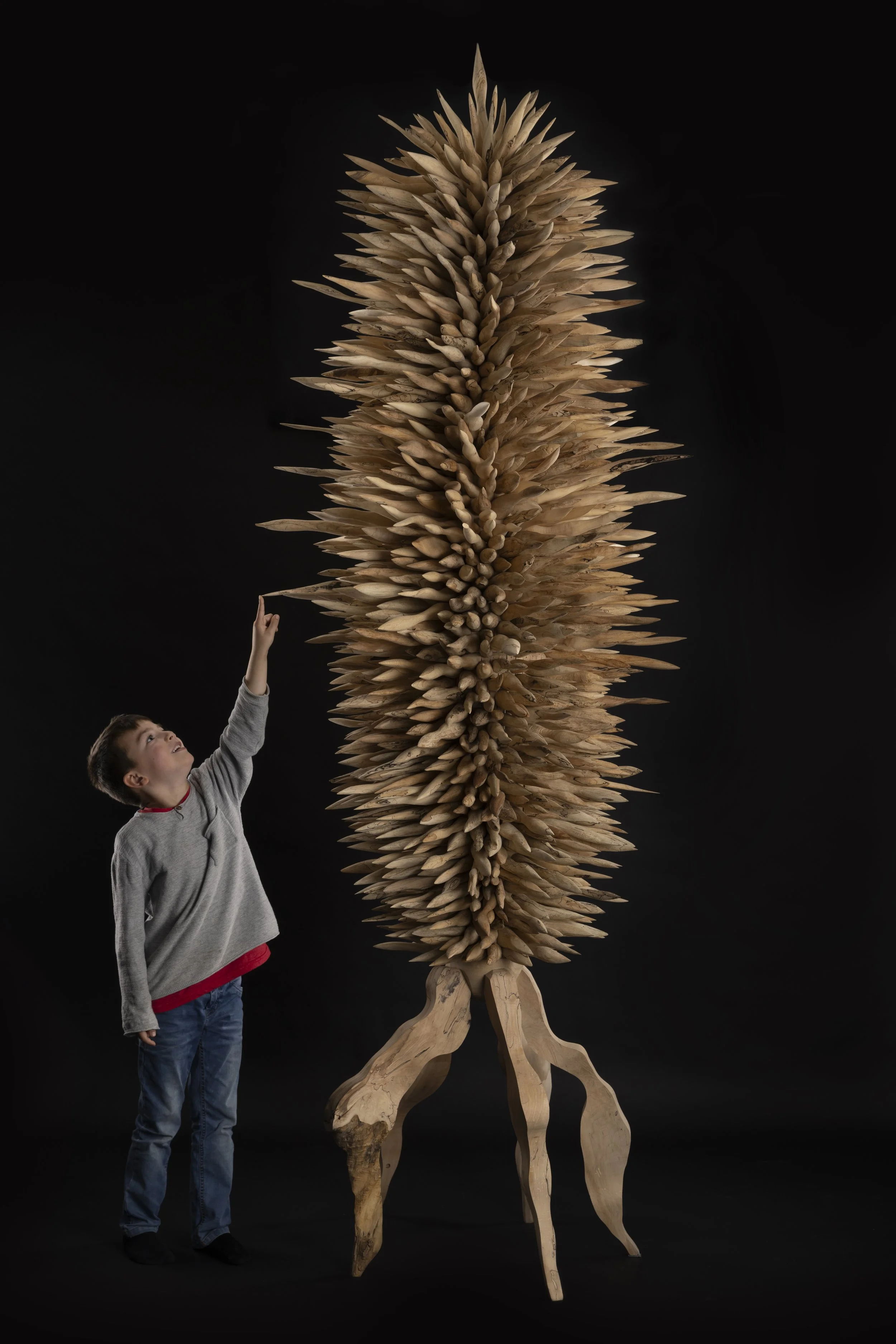
Identity Entity: wood, metal. 2023
Identity Entity wood, metal 2023
Model: Joel´s son Ezra
This effect was intended to help the viewer ask themselves some of the following questions: how is this put together? What’s on the inside? Can I get closer to see deeper inside? Am I in danger? Do I feel threatened? Why does this feel foreign to me? What’s on the other side?
Often times similar questions are used when dealing with ideas surrounding identity.
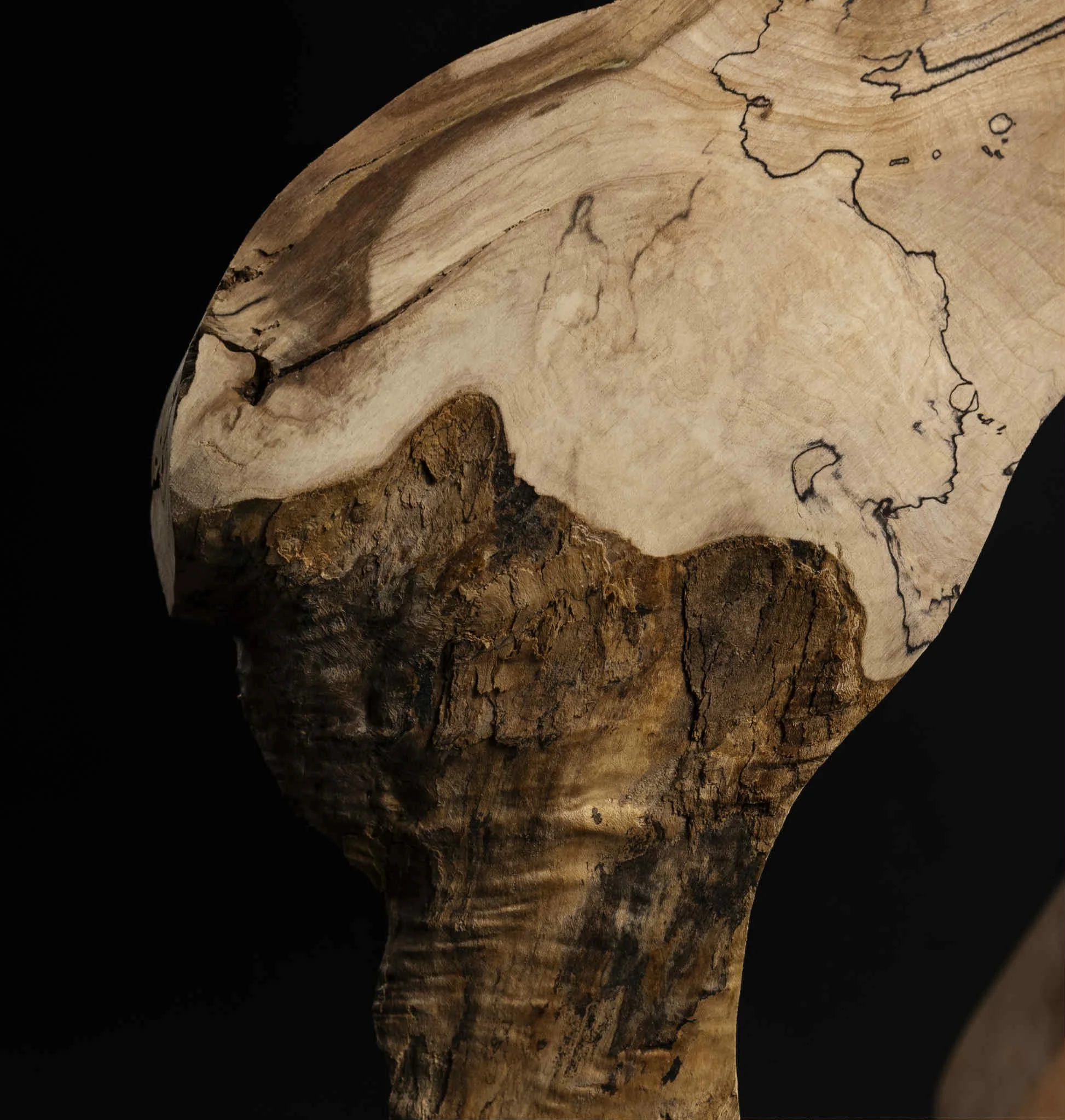
Detail of Identity Entity
This 2.5 meter, free standing sculpture consists of thousands of hand carved forms assembled around a hollow form.
The exterior is made exclusively with spalted sugar maple. This woods’ intricate, black-lined design naturally occurring from a fungus in the wood, adds additional visual elements to the piece.
The piece is designed to occupy just slightly more space than a human body, standing a bit taller than an average person. This scale is meant to impress upon the viewer that their proximity and relationship to the work mirrors — or slightly exceeds — their relationship to another human being.
With its prickly, possibly dangerous appearance, the piece was intended to elicit curiosity for its construction, such that people are drawn closer and repelled simultaneously.
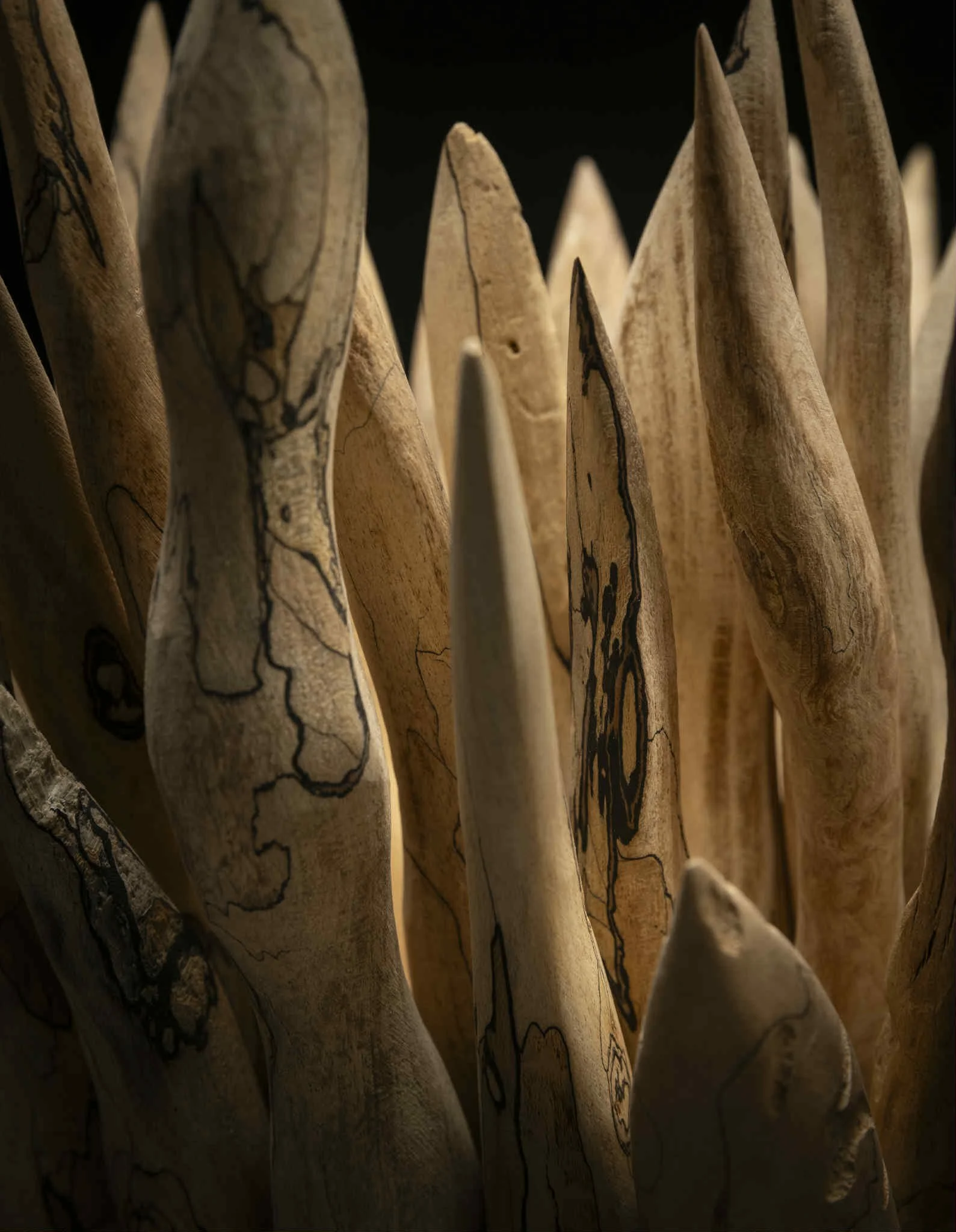
Detail of Identity Entity
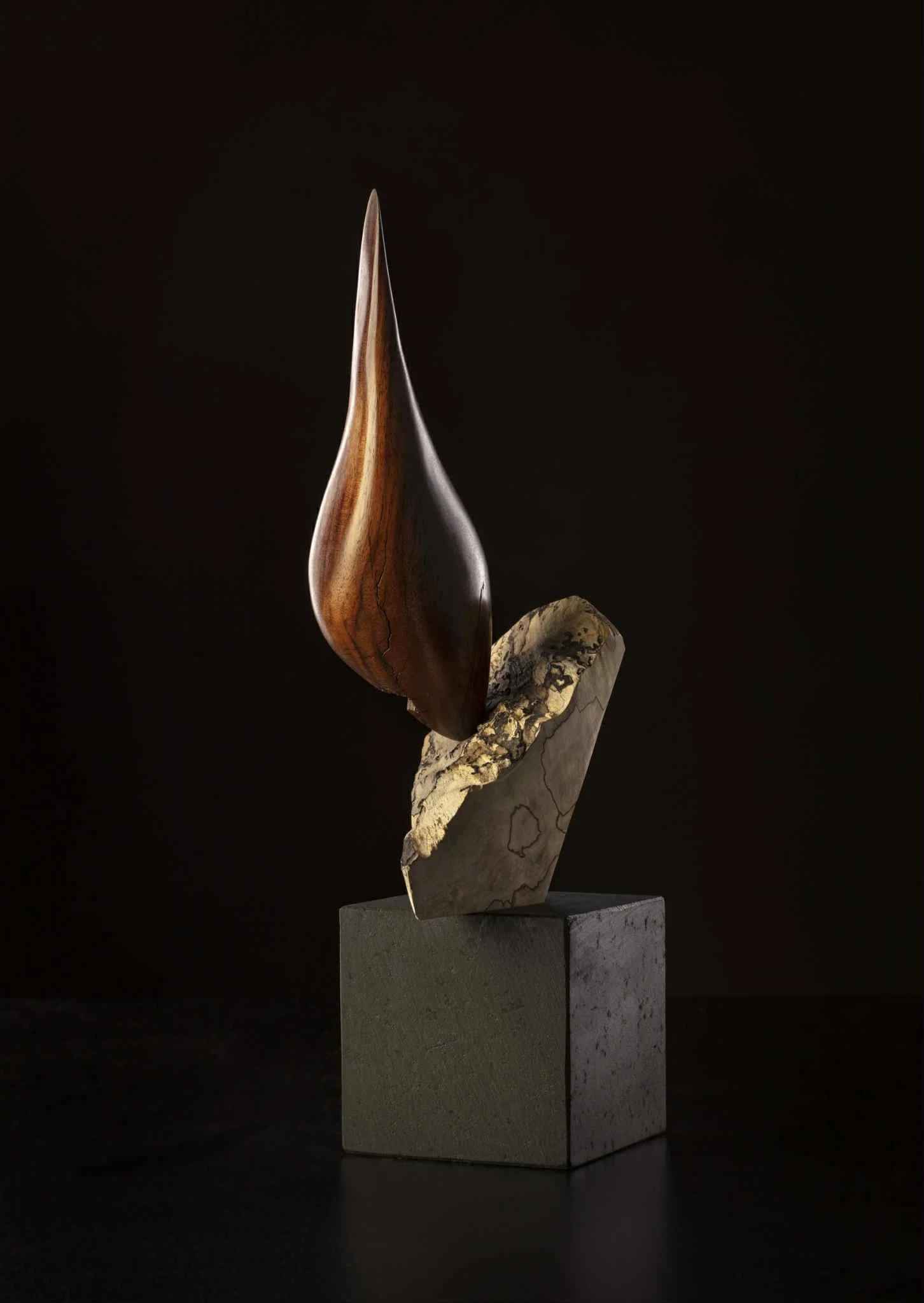
Round My Edges
Round My Edges -wood, metal stone. 2021
Round My Edges - wood, metal, stone. 2021
This piece is made from two wooden forms: one a smooth, polished voluptuous “drop” of finished Black Walnut, the other a jagged, sharp-edged, finished piece of spalted Sugar Maple.
Placed touching one another they create contrast and tension in their balanced dance growing from Faroese basalt.
The multi-wood construction creates a dialogue between the different colored woods and basalt base and stays consistent with other pieces from the “Transplanted “ series which present a form that is comprised of differing materials but represent a whole that is completely different.
This theme runs parallel to the idea that cultural, linguistic, and tradition remnants from countries of origin are blended and braided by a migrant with their adopted home and help create a third, more complex and nuanced existence.
It is also worth noting that there is but a small spot where the two pieces touch, creating an expectation that both pieces must weather change and grind down in order create more surface area, and fit together more effectively and comfortably.
In the same way, traditional expectations of migrants acclimating to their adopted countries gives way to both the adopting and the adopted mutually accommodating one another to create a more compassionate, diverse, and sustainable integration.
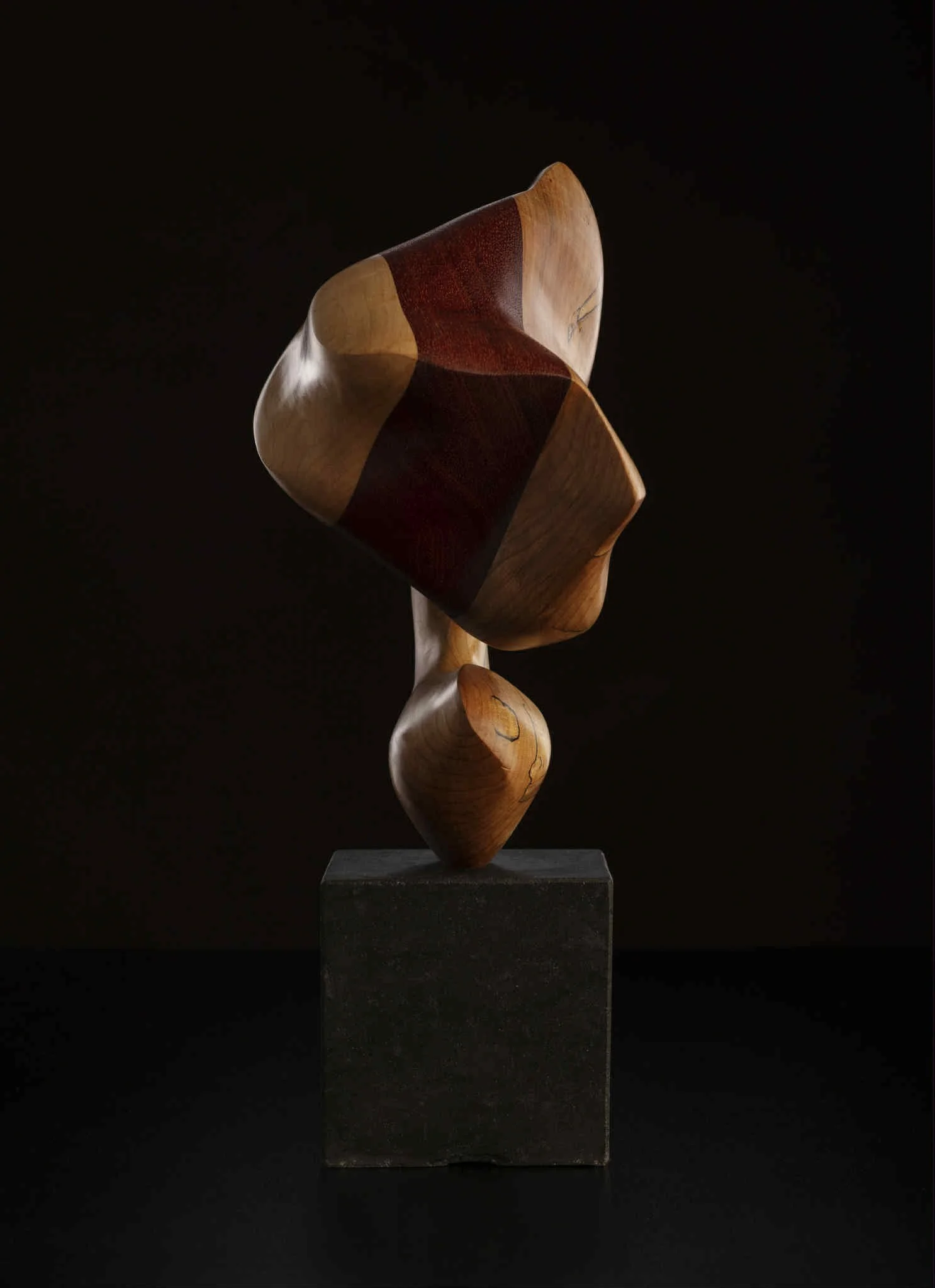
Casual Alien
Casual Alien - wood, metal, stone. 2021
Casual Alien - wood, metal, stone. 2021
Made from contrasting woods layered together and oriented vertically, this piece features a form balanced and growing from a Faroese basalt base.
It’s orientation denotes tension and vulnerability, and provides the viewer a dramatically changing form when viewed from different perspectives.
In botany, a plant that spontaneously appears in a foreign environment, thrives, and then disappears again is referred to as a “casual alien.”
Spontaneous success in integration is difficult to qualify, and no one can confidently say why one individual thrives in a foreign environment while another wilts and disappears.
The varying forms experienced in this piece by a rotating viewing reminds us that there are a wealth of related and sometimes invisible elements helping to create success and beauty.
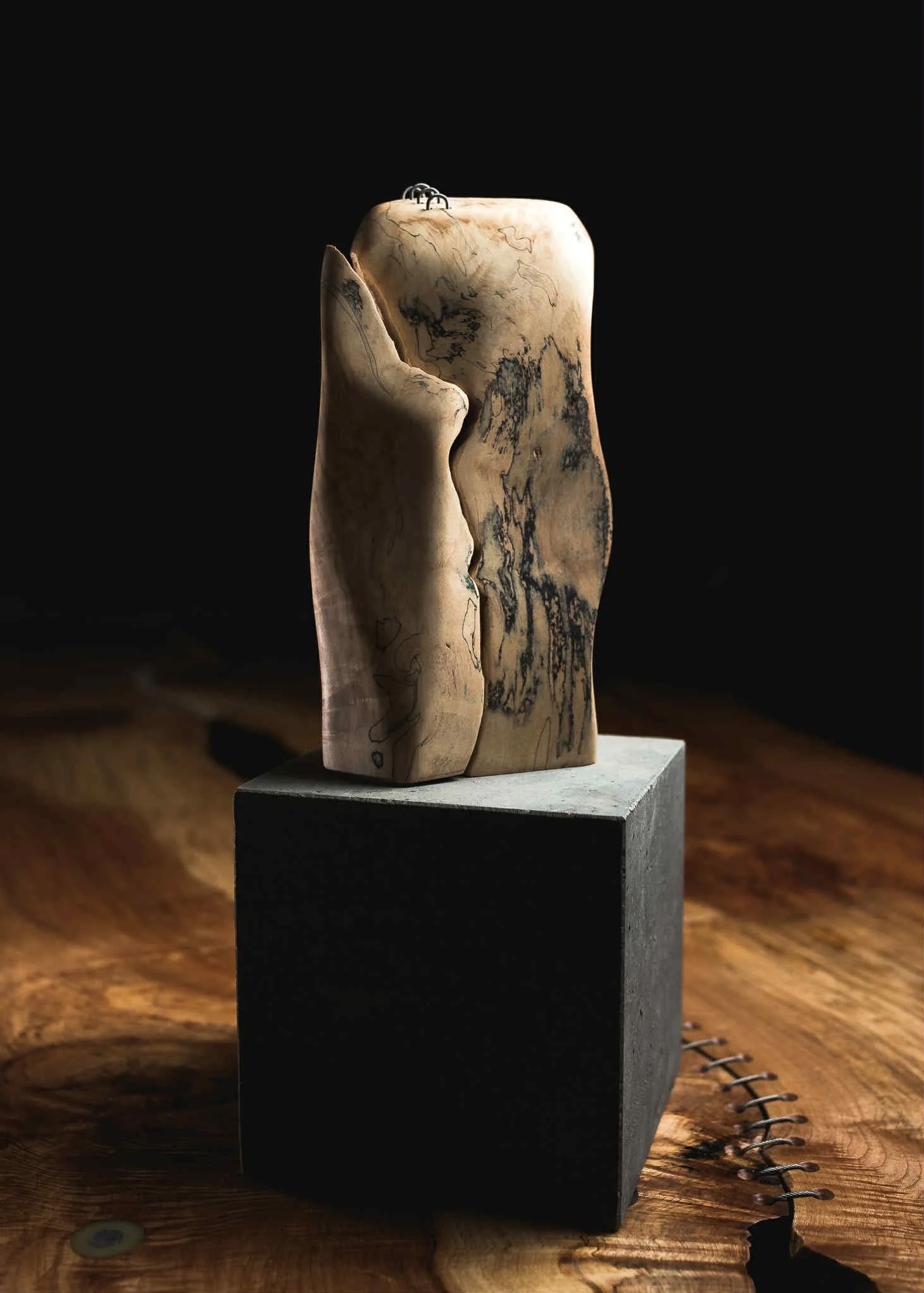
Torn
Torn - wood, metal, stone. 2021
Torn - wood, metal, stone. 2021
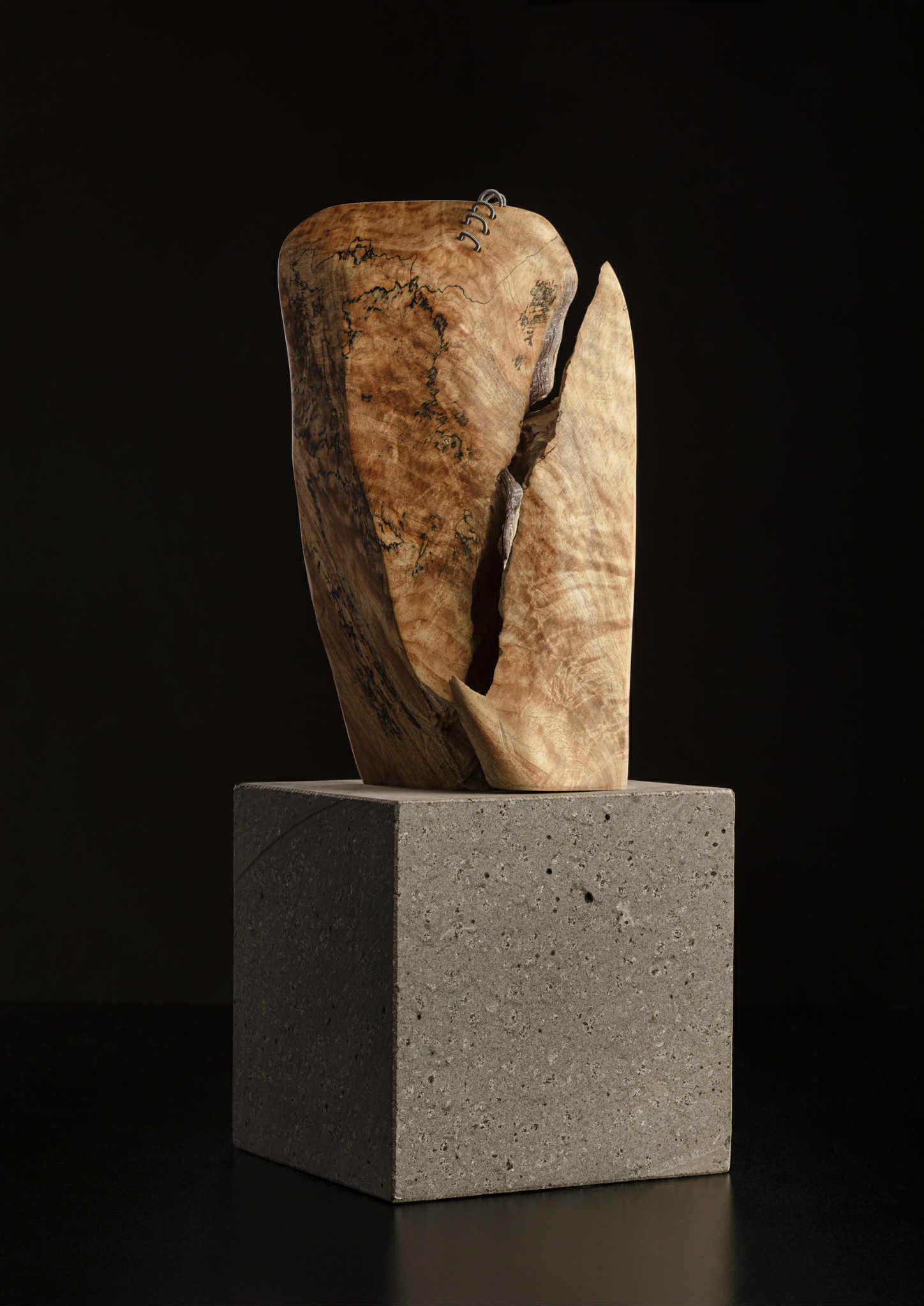
But even those who willingly and excitingly chose to migrate for work, love, or adventure experience a departure from the familiar and secure when entering the foreign and undetermined.
Utilizing preexisting cracks in this piece of wood is much like celebrating those imperfections in a persons’ character - which can be far more interesting than the polished perfection that is advocated throughout advertising and social media.
The fact that the crack is the dominating feature of the piece reinforces the idea that our scars are sometimes our most defining and attractive attributes.
Made from a single piece of spalted sugar maple, Torn “grows” from a base of Faroese basalt.
Those stitches that are used are set away from the crack, exposing a wound that is visual, but left untreated.
Migration is complex and nuanced. Every individual moving from one part of the globe to another, regardless of the reasons, experiences loss, unfamiliarity, and alienation.
Those who are unwillingly moved because of war or persecution may endure these things in heaps by experiencing the death of loved ones, loss of a home and property, and physically taxing evacuation across many borders.